
Buying or selling an online business can be a complicated process. Finding the right buyer, evaluating financial information, checking website traffic, negotiating a price, and completing the transfer all require careful planning. This is where online business marketplaces such as Flippa can become useful.
Flippa is a digital marketplace where buyers and sellers can connect to purchase or sell online businesses and digital assets. The platform covers a broad range of opportunities, including websites, ecommerce stores, SaaS businesses, apps, content sites, domains, and other digital assets.
But what is the experience actually like? Is Flippa suitable for beginners, and what should buyers and sellers know before using the platform?
In this Flippa review, we look at how the marketplace works, what you can buy and sell, fees, verification, the buying experience, seller tools, and some important considerations before completing a transaction.
What Is Flippa?

Flippa is an online marketplace designed specifically for buying and selling digital businesses and assets. Instead of searching for individual businesses through private networks, buyers can browse listings in one centralized marketplace.
The platform supports different types of digital properties, including ecommerce stores, SaaS businesses, blogs, affiliate websites, apps, Shopify stores, Amazon businesses, domains, and other online assets.
For sellers, Flippa provides tools for creating listings, presenting business information, connecting with prospective buyers, negotiating offers, and progressing toward a transaction.
For buyers, the platform provides search and discovery features that can help narrow opportunities based on factors such as business type, price, industry, and other listing information.
This makes Flippa particularly relevant for people who want to explore digital business acquisitions without relying entirely on private contacts.
How Does Flippa Work?
The Flippa process generally begins with a seller creating a listing for an online business or digital asset. Sellers can choose between auction-style listings and classified listings with an asking price. Auctions can run for a defined period, while classified listings do not have a fixed end date.
Buyers can then review listings, communicate with sellers, ask questions, conduct due diligence, and make bids or offers.
If an auction reaches its reserve price or a seller accepts an offer on a classified listing, the transaction can move toward completion. Flippa provides a Deal Completion Area where the parties can work through the transaction process.
It is important to understand that Flippa acts primarily as a marketplace. The buyer and seller are responsible for transferring the purchased assets, although Flippa provides tools and support around the transaction process.
What Can You Buy on Flippa?
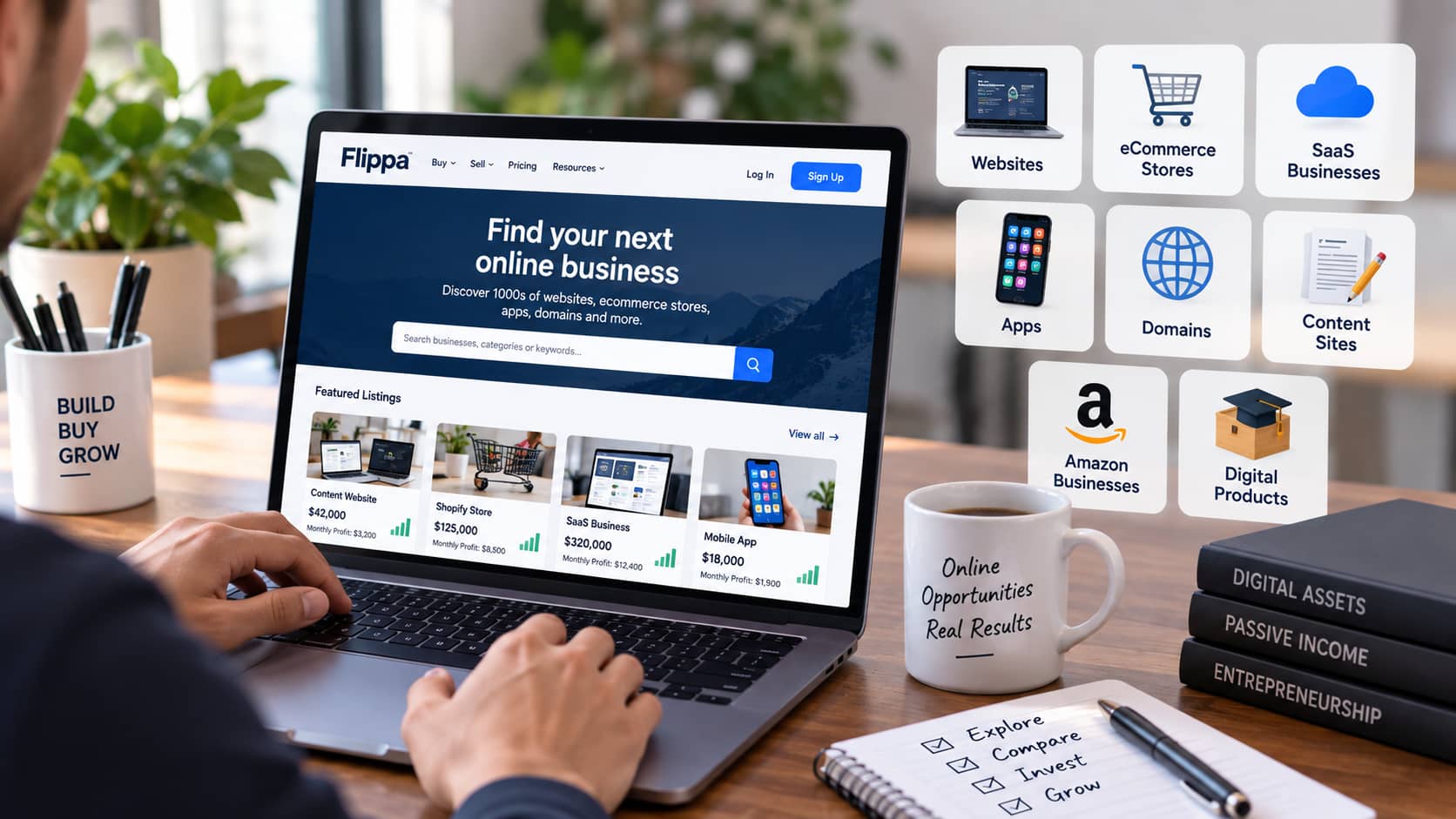
One of the biggest attractions of Flippa is the variety of digital assets available.
Depending on the current marketplace inventory, buyers may find:
-
- Ecommerce businesses
- SaaS companies
- Content websites
- Affiliate websites
- Shopify stores
- Amazon businesses
- Mobile applications
- Domains
- Blogs
- Digital products
- Other online businesses
The variety means buyers can search for opportunities that match different budgets, industries, experience levels, and business models.
However, having many listings also means buyers need to be selective. A listing should not be considered an investment simply because it appears attractive on the marketplace.
Revenue, profit, traffic sources, expenses, customer concentration, growth trends, supplier relationships, and operational requirements should all be investigated before making a purchase.
Flippa Reviews: What Is the Buying Experience Like?
The buying experience on Flippa starts with browsing available listings and identifying businesses that fit your requirements.
Buyers can examine listing information before contacting sellers. Once a potential opportunity has been identified, communication with the seller becomes an important part of the process.
One useful aspect of the marketplace is that buyers can ask questions directly and request additional information as part of their due diligence.
Flippa also provides verification features designed to give users additional information about marketplace participants. Verification can include email, phone, government ID, credit card, LinkedIn, and proof-of-funds verification, depending on the user’s verification status.
However, verification should not be confused with a guarantee that a business will perform as advertised. Flippa itself advises buyers to continue investigating seller claims and performing due diligence.
For this reason, experienced buyers should treat the information in a listing as the starting point for research rather than the final word.
What Do Flippa Reviews Say About Due Diligence?
Due diligence is one of the most important parts of purchasing an online business.
A buyer should examine more than revenue screenshots. Depending on the business, relevant checks can include:
-
- Bank and payment records
- Profit and loss statements
- Website analytics
- Traffic sources
- Customer acquisition channels
- Advertising expenses
- Supplier relationships
- Operating costs
- Domain ownership
- Software subscriptions
- Intellectual property
- Customer concentration
- Search engine dependency
- Social media accounts
- Historical business performance
Flippa’s own buyer resources emphasize the importance of researching an opportunity before committing funds. Its buyer guide also highlights due diligence as a major part of the acquisition process.
This is an important point for anyone reading Flippa reviews. The marketplace can provide access to opportunities, but the quality of a purchase ultimately depends heavily on the buyer’s investigation and the specific business being acquired.
Flippa for Sellers: How Does Selling Work?
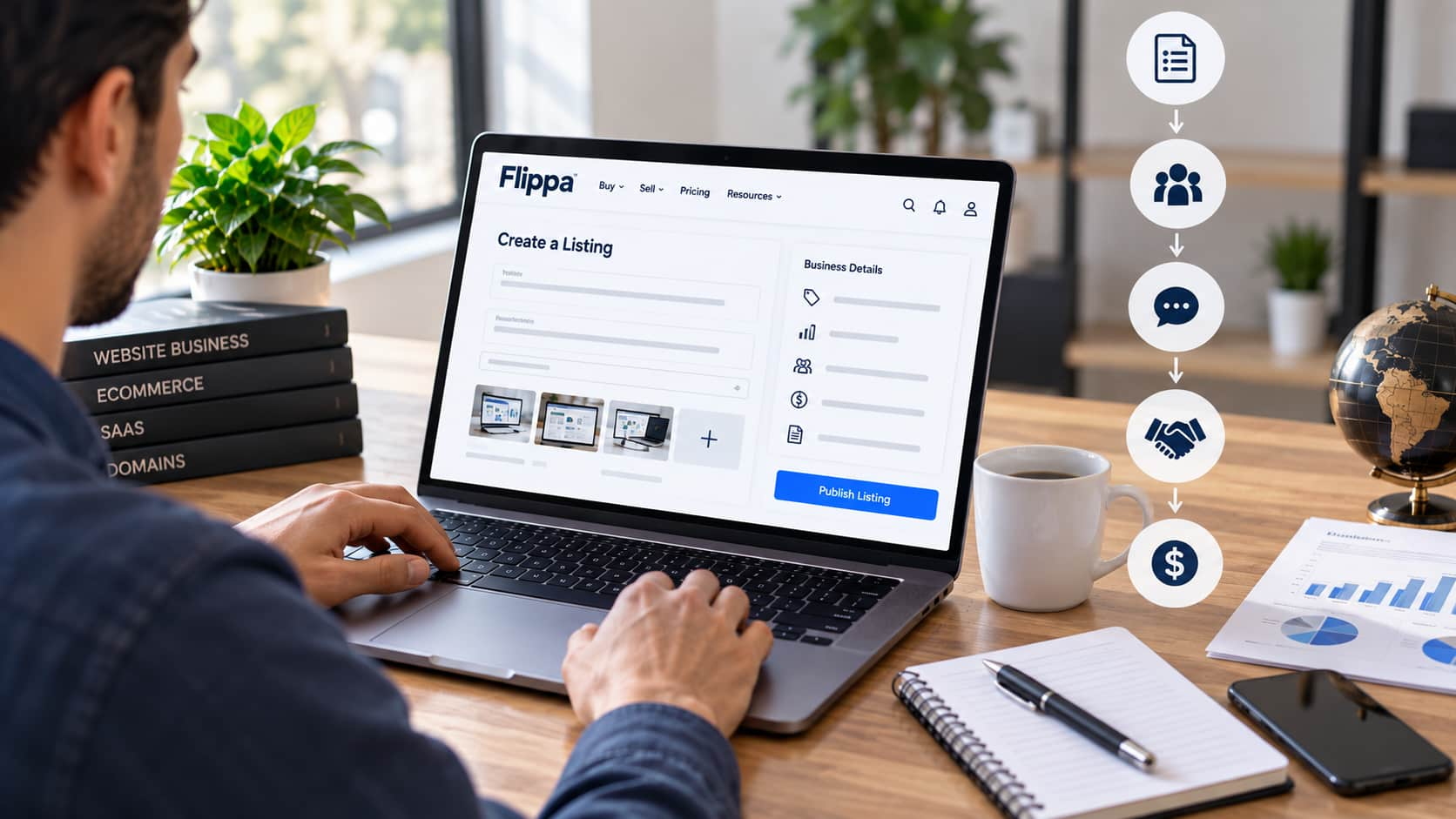
Flippa is also designed for people who want to sell an online business or digital asset.
The seller process involves creating a listing, presenting business information, connecting with potential buyers, negotiating terms, completing due diligence, and eventually transferring the asset.
Flippa says its seller tools allow owners to connect relevant financial and operational data to their listings. The company also promotes buyer matching tools designed to connect sellers with prospective buyers.
Sellers can therefore use the marketplace as an additional distribution channel instead of trying to find buyers entirely through personal networks.
For larger businesses, Flippa also offers broker-assisted services. Its current pricing information describes broker-led services that include negotiation support, buyer qualification, deal structuring, legal-document tools, and transaction assistance.
How Much Does Flippa Cost?
Flippa’s pricing depends on whether you are buying or selling and on the type and value of the asset.
Buyers can access the marketplace without a standard fee simply to browse available opportunities. Flippa also offers a Premium buyer plan, which currently costs $49 per month according to its pricing page and provides additional features such as early deal access and other buyer-focused tools.
Sellers may pay listing fees and success fees. Flippa’s current pricing page lists different seller packages depending on the asset category and asking price. For some listings, entry-level packages start at $29, while success fees can apply when a transaction is completed.
Because pricing can change, sellers should check the current fee structure before publishing a listing.
Transaction-related costs can also depend on the payment method. Flippa supports payment options and escrow-related services, with fees varying according to the transaction.
Is Flippa Safe to Use?
Safety is naturally an important concern when purchasing an online business.
Flippa has verification systems and transaction tools designed to reduce some of the risks associated with online marketplace transactions. The platform also provides resources covering verification, trust and safety, payments, due diligence, and transactions.
However, no marketplace should be treated as a substitute for independent research.
A buyer should verify important financial and operational claims before completing a deal. For larger acquisitions, professional legal, accounting, or financial advice may also be appropriate.
Using an escrow or supported payment service can provide additional transaction structure, but buyers should still understand exactly what is being purchased and what responsibilities they assume after the transaction.
Pros and Cons of Flippa
Pros
-
- Wide selection of digital businesses and assets
- Multiple business models and industries
- Search and discovery tools for buyers
- Tools for sellers to create marketplace listings
- Buyer and seller verification features
- Negotiation and deal-management tools
- Support for escrow and transaction services
- Broker-assisted options for qualifying businesses
- Educational resources for buyers and sellers
Cons
-
- Listing quality can vary considerably
- Buyers need to perform their own due diligence
- Seller fees and success fees can affect transaction costs
- Attractive listings can still require significant investigation
- Managing an acquired online business requires time and expertise
- Additional professional costs may be necessary for complex acquisitions
Who Should Consider Using Flippa?
Flippa may be relevant to several types of users.
First-time buyers can use the marketplace to learn about different online business models and explore acquisition opportunities. Flippa also publishes educational material covering the acquisition process and due diligence.
Experienced entrepreneurs may use the platform to search for businesses that complement an existing portfolio.
Website and ecommerce owners can use Flippa as a marketplace for reaching potential buyers when they decide to sell.
Digital entrepreneurs may also find the platform useful for comparing different types of online assets before deciding which business model fits their goals.
The right fit ultimately depends on the buyer’s budget, experience, risk tolerance, and ability to evaluate a business properly.
Final Thoughts on Flippa Reviews
Flippa provides a centralized marketplace for people interested in buying or selling online businesses and digital assets. Its broad range of listings, buyer and seller tools, verification features, negotiation functionality, and transaction resources make it a platform worth researching for anyone exploring digital business acquisitions.
At the same time, a Flippa listing should never replace independent due diligence. Buyers need to investigate financial records, traffic, expenses, business operations, ownership details, and other relevant information before committing to a transaction.
For sellers, Flippa provides access to a marketplace of prospective buyers along with different listing and brokerage options. For buyers, it offers a large selection of digital businesses that can be filtered and researched according to individual requirements.
Overall, the most important factor when using Flippa is not simply finding an attractive listing. It is understanding the business behind the listing and making sure the available evidence supports the asking price and business opportunity.